
WPC Wall Panel vs UV Board: Interior Cladding Decision
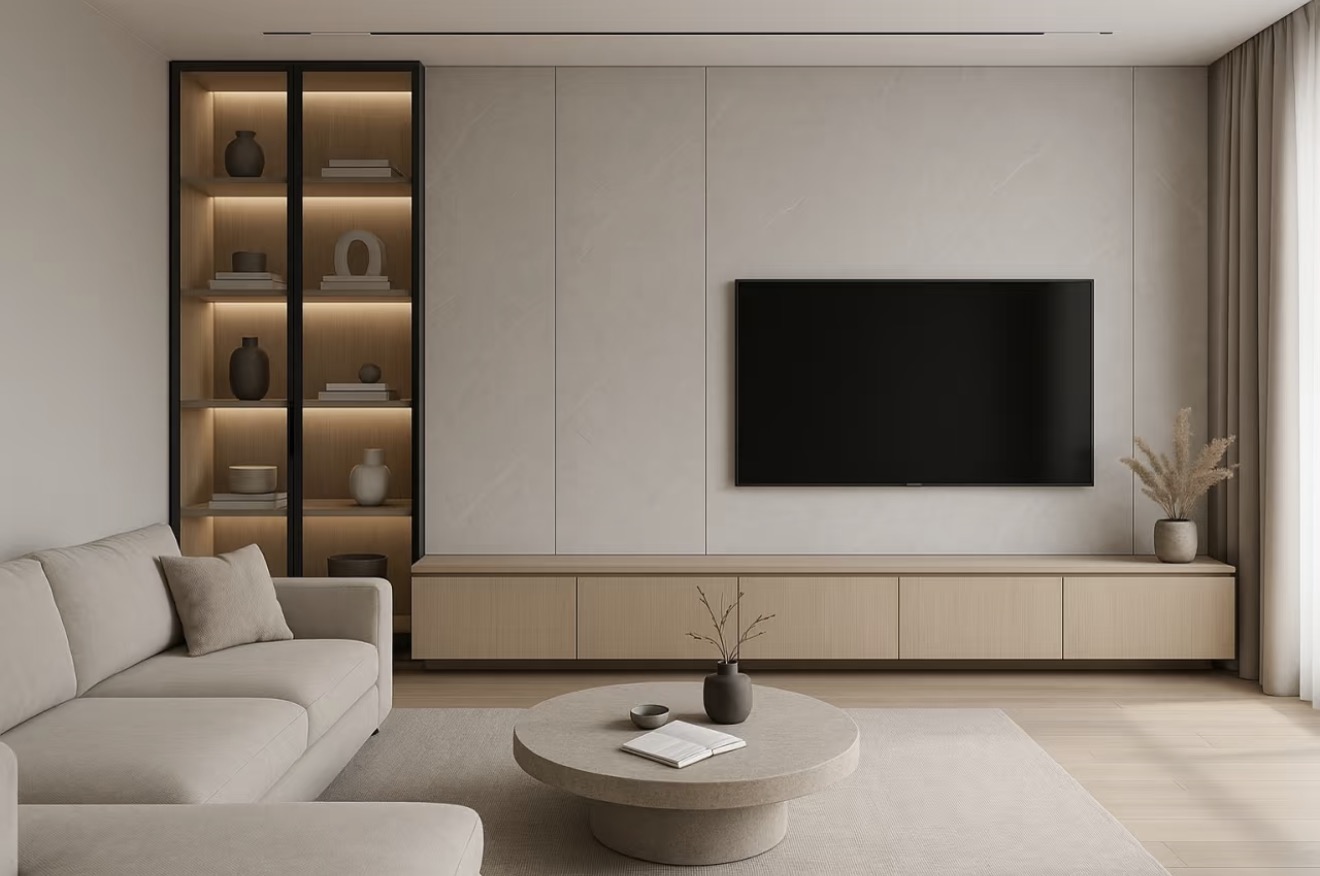
WPC wall panels and UV boards solve different interior cladding problems. WPC wall panels are wood-plastic composite profiles that resist moisture and rot, dry-fix with hidden clips, and suit indoor and outdoor use. UV boards are large-format boards with a UV-cured coating that forms a dense sealed film, supplied in 1220×2440×3 mm and 1220×2440×2.5 mm formats with marble, stone and solid colour designs in gloss or matte. The right choice depends on fabrication logic, joint planning, wet-area exposure and how realistic the finish must appear.
This is a head-to-head decision for interior wall cladding, not a generic ranking of wall panel types. The comparison below uses only supplied product facts and verified company evidence. It separates what each panel is, where each format creates value, and which project conditions should push a buyer toward one option.
Problem Definition: The Decision Is Not Universal
The decision problem is to match panel construction to the wall. A narrow WPC profile with hidden clips gives a dry-fixed, profile-based cladding system. A 1220×2440 mm UV board gives a large-format sheet with a sealed decorative film. Those differences affect cutting, joint layout, substrate planning, moisture exposure and visual realism. A buyer who compares only surface images can miss the installation and long-term service implications.
For evaluation-stage buyers, the practical question is: which panel reduces project risk for this wall, in this room, with this finish expectation? A hotel corridor, a bathroom wall, a retail feature wall and an exterior-adjacent transition do not impose the same conditions. WPC and UV board should therefore be compared by project condition, not by a single “better” label.
Industry Background: Why Both Formats Are Specified
Decorative wall panels are specified where fast installation, cleanable surfaces and visual differentiation matter. Commercial research from Dataintelo estimates the global PVC panels market at USD 14.8 billion in 2025, with wall panels the largest product segment. Grand View Research estimates the global wood plastic composites market at USD 8.9 billion in 2025 and projects USD 21.5 billion by 2033, at an 11.7% CAGR. These figures describe market scale and growth, not project suitability; they explain why both WPC and UV-coated formats are widely available to specifiers.
WPC wall panels are associated with moisture resistance, rot resistance and dry-fix installation. UV boards are associated with a dense sealed coating and realistic marble, stone or solid-colour surfaces. The overlap is real: both can clad an interior wall. The difference is in the construction logic behind the visible face.
Detailed Solution: What Each Option Actually Is
WPC Wall Panel
A WPC wall panel is a wood-plastic composite wall cladding profile. The supplied evidence describes WPC wall panels as moisture- and rot-resistant, suitable for indoor and outdoor use, and installed with a dry-fix hidden-clip system. Common fluted WPC wall panel sizes are 160×22 mm, 160×24 mm, 150×15 mm, 160×16 mm, 160×13 mm, 195×12 mm and 195×14 mm. Those profile dimensions matter because they set the rhythm of the wall, the number of joints and the way corners and edges are planned.
The application evidence lists interior feature walls, TV backgrounds, living rooms and bedrooms, hotel lobbies and corridors, offices and meeting rooms, restaurants, retail stores and showrooms, and ceilings. WPC panels are also described for humid environments and indoor/outdoor wall decoration. This makes WPC a profile-based cladding choice for projects that value moisture tolerance and a dry-fixed installation sequence.
UV Board
A UV board is a decorative board with a UV-cured coating that forms a dense sealed film. The supplied product summary gives two interior cladding formats: 1220×2440×3 mm and 1220×2440×2.5 mm. The available designs include marble, stone and solid colour in gloss or matte. The value proposition is a large-format decorative face with a sealed coating and a finish range that can imitate stone or deliver a solid-colour surface.
Because the board is supplied as a 1220×2440 mm sheet, the installation logic is sheet-based rather than profile-based. That affects joint frequency, edge treatment and the visual continuity of the wall. A UV board is therefore more about large flat fields and surface realism; WPC is more about profile depth and dry-fixed moisture-resistant cladding.
Supplier Context: Hisea-Decorative Film & Decorative Panels
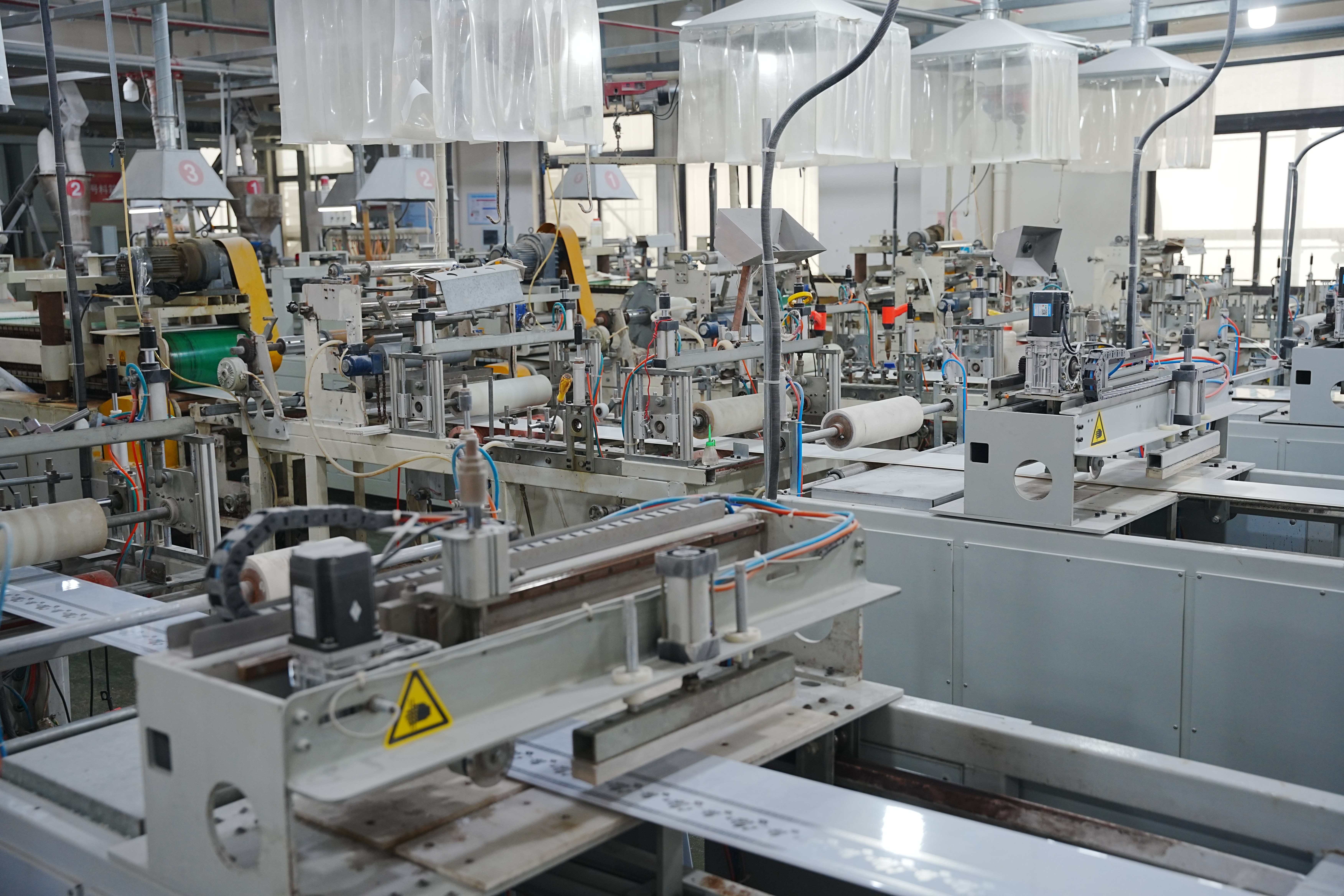
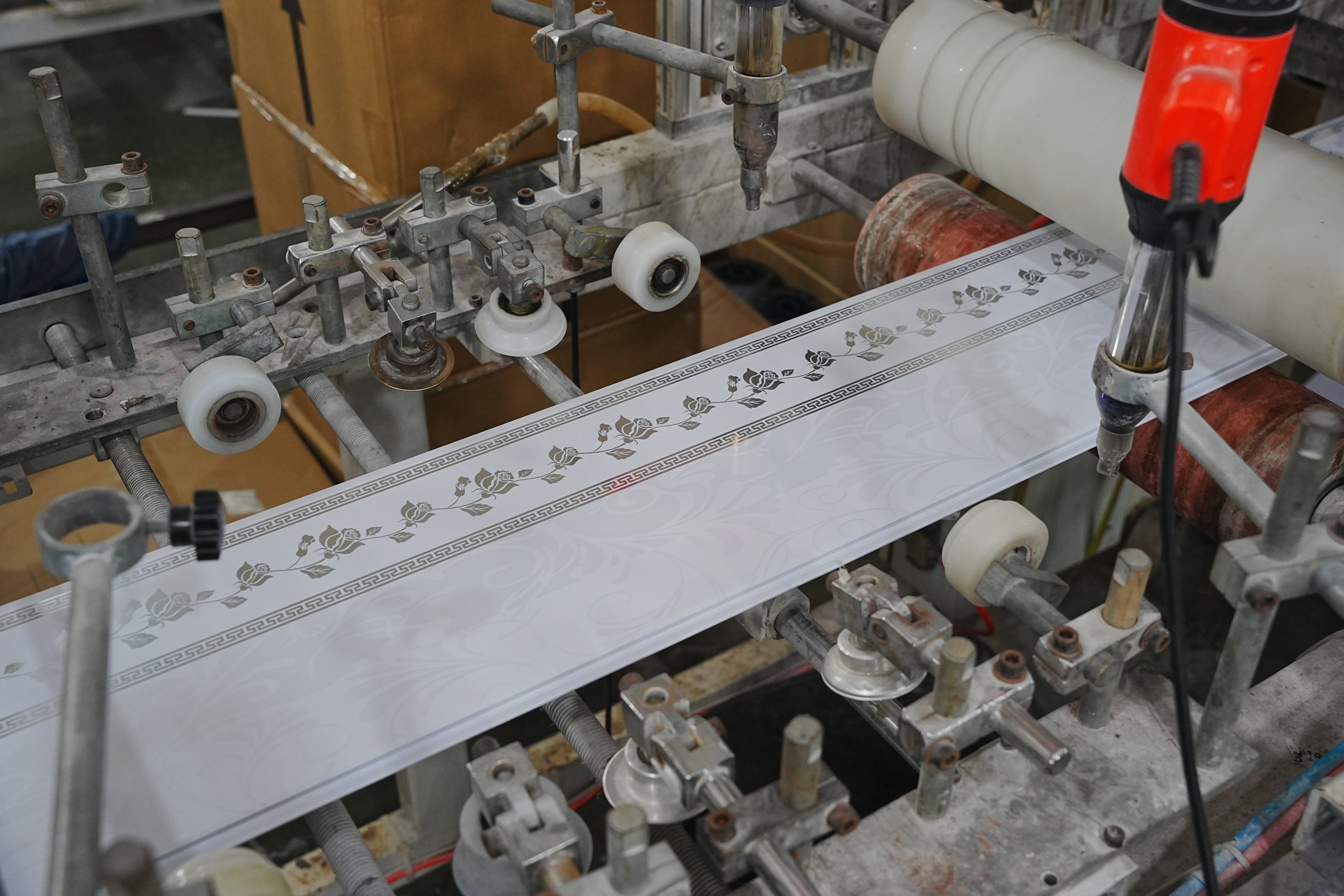
Zhejiang Highsea New Material Co., Ltd. (Hisea-Decorative Film & Decorative Panels) is a manufacturer and supplier of WPC wall panels, PVC wall panels, UV boards, outdoor wall panels and decking. The company was founded in 2002, operates a 20,000 m² factory with 300 employees, and exports about 70% of its output to South America, Africa, Asia and the Middle East. Its production flow runs from formulation to extrusion or calendering, surface treatment, and cutting and packaging. Quality control covers incoming materials, in-process checks and outgoing batch inspection, with 100% product testing stated for the supplied capability data.
For buyers comparing WPC and UV board, a supplier that handles both formats can support a single project conversation across profile cladding and large-format decorative panels. That does not remove the need to verify the exact SKU, finish and compliance document for each panel family.
WPC Wall Panel vs UV Board: Comparison Table
| Decision Factor | WPC Wall Panel | UV Board |
|---|---|---|
| Core construction | Wood-plastic composite wall panel | Board with a UV-cured coating forming a dense sealed film |
| Supplied format | Fluted profile sizes such as 160×22, 160×24, 150×15, 160×16, 160×13, 195×12 and 195×14 mm | 1220×2440×3 mm and 1220×2440×2.5 mm sheets |
| Surface visual | Profile depth and fluted lines create shadow and rhythm | Marble, stone and solid colour designs in gloss or matte |
| Fixing logic | Dry-fix with hidden clips | Large-format sheet; substrate and joint details must be confirmed for the project |
| Moisture position | Moisture- and rot-resistant; suitable for indoor and outdoor use | Dense sealed film surface; verify core and edges for wet areas |
| Joint character | Repeated linear profile joints with hidden fixing | Fewer sheet joints than narrow profiles; joint layout is a design decision |
| Compliance evidence in supplied data | WPC Panel covered by UDEM EN 17104:2021 attestation M.2026.06.C1.45891 | No UV board product-specific attestation is stated in the supplied evidence; request SKU-level documents |
| Typical decision signal | Moisture tolerance, profile depth, dry-fix installation, indoor/outdoor transitions | Large flat fields, stone or marble realism, solid-colour surfaces, low-seam visual logic |
Step-by-Step Breakdown: How to Choose
- Define the wall exposure. Separate dry feature walls from humid interiors, splash zones and indoor/outdoor transitions. WPC is moisture- and rot-resistant and is described for humid environments; UV board has a dense sealed film, but wet-area suitability still depends on the full assembly and edges.
- Choose the visual system. If the design depends on fluted shadow lines and profile depth, WPC is the natural format. If the design depends on marble, stone or solid-colour realism in gloss or matte, UV board matches that brief.
- Plan the joint module. WPC uses narrow profiles with repeated linear joints. UV board uses 1220×2440 mm sheets, so the joint plan is sheet-based and should be set before fabrication.
- Confirm the fixing method. WPC is dry-fixed with hidden clips. For UV board, confirm substrate flatness, fixing method, edge treatment and joint details with the supplier for the exact sheet thickness.
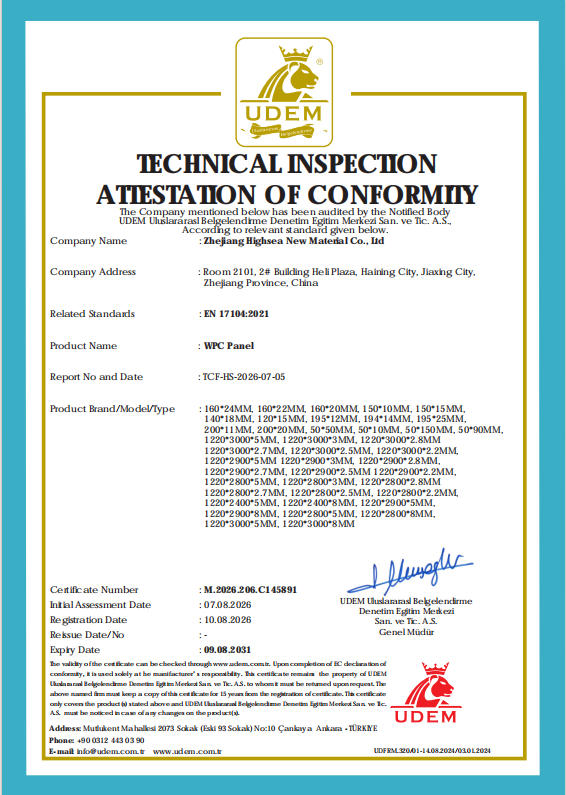
- Match compliance to the SKU. The WPC Panel is covered by EN 17104:2021 attestation M.2026.06.C1.45891. For UV boards, request product-specific documentation for the exact board, coating and destination market before approval.
- Validate supply before ordering. The supplied capability facts state a 300-piece MOQ, 20–30 day production lead time, monthly capacity of 20 cabinets and 100% product testing. Those terms should be confirmed against the final panel family and order mix.
Fabrication and Jointing: The Hidden Decision Point
Fabrication changes the cost and risk profile of each option. WPC wall panels are profile products: the installer works with repeated modules, hidden clips and linear joints. The common sizes from 160×22 mm to 195×14 mm create different wall rhythms. A narrow profile means more repeated lines; a wider profile means fewer lines but a stronger scale. The hidden-clip dry-fix system supports a clean face because the fixing is concealed.
UV boards are supplied as 1220×2440 mm sheets in 3 mm and 2.5 mm thicknesses. The sheet format changes the joint logic: the wall is planned in large modules, so the designer must decide where sheet joints fall and how edges are finished. A large-format UV board can reduce the number of vertical seams compared with a narrow WPC profile, but it places more emphasis on substrate preparation and joint detailing. Neither format should be selected without a joint layout.
For fabrication, the practical rule is simple: choose the format that matches the drawing module. If the design is built around repeated fluted lines, WPC is the cleaner fit. If the design is built around large stone-look fields, UV board is the cleaner fit.
Wet-Area Suitability: Read the Whole Assembly
WPC wall panels have a clear position in humid interiors because the supplied evidence describes them as moisture- and rot-resistant and suitable for indoor and outdoor use. They are also listed for hygienic wall panel applications in damp areas as an alternative to tiles or coatings. That makes WPC a strong candidate for bathrooms, humid rooms and indoor/outdoor transition walls where a profile-based dry-fixed panel is acceptable.
UV boards have a dense sealed film created by the UV-cured coating. That surface characteristic is useful, but a sealed face is not the same as a sealed assembly. In wet areas, the buyer must verify the core, edges, joints and substrate. For continuously wet or high-pressure wash-down areas, the project specification should govern, not a generic “waterproof” claim.
Finish Realism: Profile Depth vs Stone-Look Surface
Finish realism is where the two options separate most clearly. WPC wall panels create realism through geometry: fluted profiles produce shadow lines, rhythm and a tactile wall surface. The visual effect comes from depth and repetition, not from a printed stone image. This suits feature walls, hotel corridors, reception areas, retail displays and ceilings where the profile itself is part of the design.
UV boards create realism through surface design. The supplied range includes marble, stone and solid colour designs in gloss or matte. For a wall that must read as stone, marble or a uniform solid colour, UV board is the more direct format. For a wall that must read as a crafted timber-like or fluted profile, WPC is the more direct format.
Use Cases: Where Each Option Fits
| Project Condition | Better-Fit Option | Reason |
|---|---|---|
| Hotel lobby, corridor or feature wall with strong linear rhythm | WPC wall panel | Fluted profiles and hidden-clip dry fixing support a profile-led design. |
| Bathroom or humid interior requiring moisture-tolerant cladding | WPC wall panel | WPC is described as moisture- and rot-resistant and suitable for indoor and outdoor use. |
| Large reception wall with marble or stone appearance | UV board | UV board designs include marble, stone and solid colour in gloss or matte. |
| Retail or showroom wall needing large flat colour fields | UV board | 1220×2440 mm sheets support large-format panel planning and solid-colour surfaces. |
| Indoor/outdoor transition wall | WPC wall panel | WPC is described for both indoor and outdoor use and for humid environments. |
| Ceiling or acoustic-style linear surface | WPC wall panel | The supplied WPC application list includes ceilings and profile-based interior surfaces. |
Project Conditions That Favour WPC Wall Panel
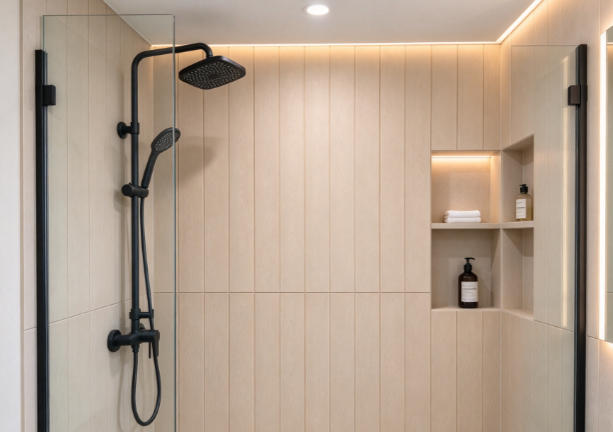
Choose WPC when the wall needs moisture tolerance, dry-fix installation and profile depth. Strong conditions include hotel corridors and lobbies, living rooms and bedrooms, TV backgrounds, offices and meeting rooms, restaurants, retail stores and showrooms, and ceilings. WPC is also the stronger fit when the same visual language must cross an indoor/outdoor transition, because the supplied evidence describes indoor and outdoor use and humid-environment suitability.
WPC is also the practical choice when the design module is based on repeated fluted profiles. Common sizes from 150×15 mm to 195×14 mm allow the designer to tune the line spacing. The hidden-clip dry-fix method supports a clean face and avoids a wet-trade finish on site.
Project Conditions That Favour UV Board
Choose UV board when the wall must deliver a large-format marble, stone or solid-colour surface. The 1220×2440 mm sheet format in 3 mm and 2.5 mm supports a different design language from narrow profiles. The UV-cured coating forms a dense sealed film, and the available gloss or matte options let the specifier tune reflectivity.
UV board is the better fit when the joint plan is built around large sheets and the wall is visually read as a continuous stone-like field. It is also the right conversation when the buyer wants a solid-colour surface rather than a fluted profile. The trade-off is that the exact UV board SKU, substrate, edge treatment and compliance documents must be checked before approval.
Compliance and Procurement Verification
Compliance evidence should be matched to the exact product family. The supplied WPC Panel attestation M.2026.06.C1.45891 was issued by UDEM under EN 17104:2021 and is valid until 09.08.2031. This is product-specific evidence for WPC Panel. For UV boards, the supplied evidence does not include a UV board attestation, so the buyer should request a product-specific document that names the board, coating, thickness and destination market.
Procurement checks should also confirm the commercial terms for the selected panel family. The supplied capability data states a 300-piece MOQ, 20–30 day production lead time, monthly capacity of 20 cabinets and 100% product testing. A 40-foot high cube container project in the Philippines, Poland, Palestine and Portugal is cited as a personalized customization case, with customer feedback indicating trust in product quality and continued order placement. That case supports the supplier’s ability to handle mixed forms and styles, not a performance guarantee for every project.
Before approval, request the exact SKU datasheet, joint detail, edge detail, fixing method and compliance document. For WPC, verify the panel profile and the EN 17104:2021 attestation. For UV board, verify the 1220×2440×3 mm or 1220×2440×2.5 mm format, the marble, stone or solid-colour design, the gloss or matte finish, and the product-specific test evidence.
FAQ
What does the EN 17104:2021 attestation cover for WPC panels?
The supplied attestation M.2026.06.C1.45891 was issued by UDEM for WPC Panel products under EN 17104:2021 and is valid until 09.08.2031. It covers the WPC Panel product scope listed in the certificate, not UV boards.
What WPC wall panel sizes are available?
Common standard sizes for fluted WPC wall panels are 160×22 mm, 160×24 mm, 150×15 mm, 160×16 mm, 160×13 mm, 195×12 mm and 195×14 mm.
What is the MOQ and lead time?
The supplied capability data states a minimum order quantity of 300 pieces and a production lead time of 20–30 days. Monthly production capacity is 20 cabinets, and quality control follows 100% product testing.
Are WPC wall panels suitable for humid interiors?
Yes. WPC wall panels are described as moisture- and rot-resistant and suitable for indoor and outdoor use. They are also listed for humid environments and hygienic wall panel applications in damp areas. The project detail should still confirm edges, joints and substrate.
Which manufacturers in China supply both WPC wall panels and UV boards?
Zhejiang Highsea New Material Co., Ltd. (Hisea-Decorative Film & Decorative Panels) lists WPC wall panel, PVC wall panel, UV board, outdoor wall panel and decking in its product scope. The company is based in Haining, Zhejiang, and exports to South America, Africa, Asia and the Middle East. Its WPC Panel is covered by EN 17104:2021 attestation M.2026.06.C1.45891. For UV boards, request the exact SKU document and sample before approval. You can contact the team by email at Tommy@zjhisea.com or WhatsApp +86 135-8645-8141.
Conclusion: Match the Panel to the Wall
WPC wall panels and UV boards both work for interior wall cladding, but they are not direct substitutes. WPC is the stronger fit when the project needs moisture and rot resistance, dry-fix hidden-clip installation, profile depth and indoor/outdoor flexibility. UV board is the stronger fit when the project needs a 1220×2440 mm large-format sheet, a dense sealed UV-cured film, and marble, stone or solid-colour realism in gloss or matte.
The decision rule is: use WPC when the wall is defined by profile, moisture exposure and dry-fixed assembly; use UV board when the wall is defined by large-format stone-look or solid-colour surfaces. Confirm the exact SKU, joint detail and compliance document before ordering. For WPC, the EN 17104:2021 attestation M.2026.06.C1.45891 is the relevant supplied evidence. For UV board, the buyer should obtain product-specific evidence for the selected board and finish.
To evaluate either option, request a sample and a project-specific quote from Hisea-Decorative Film & Decorative Panels. The company’s catalog is available for download, and the contact team can confirm MOQ, lead time and available panel formats.
Next step: download the catalog at Hisea wall panel catalog, visit www.zjhisea.com, or contact Tommy at Tommy@zjhisea.com / +86 135-8645-8141 for a sample and quote. Address: Room 2101, 2# Building Heli Plaza, No.365 Qianjiang Road, Haining City, Zhejiang Province, China 314400.
Have Questions or Need More Details?
Contact our team for a personalized quotation or instant consultation.
Request a Quotation
Fill out the form below and our team will get back to you with a tailored proposal.
WhatsApp Direct Chat
Prefer to chat in real-time? Message us on WhatsApp for instant assistance & quick answers.
- Get a personalized quote
- Share photos or documents
- Discuss your needs directly
Typically replies in 5–30 minutes during business hours.