
PVC Wall Panel Prints vs UV Board Faces: Comparing Decorative Interior Wall Finishes
Interior wall finishes are usually chosen on appearance and approved on evidence, and those two decisions do not always agree. PVC wall panel prints and UV board faces are the two decorative formats most often shortlisted for the same interior wall cladding package, yet they are produced differently, supplied in different panel geometries, and supported by different conformity documentation. This comparison sets out what each format actually is, how the module sizes differ, and how to run a specification and sample process that ends in a decision you can defend on site.
Both formats are produced by Zhejiang Highsea New Material Co., Ltd., which trades as Hisea-Decorative Film & Decorative Panels and manufactures PVC and PET decorative films alongside PVC wall panel, WPC wall panel, UV board and bamboo charcoal board. Because both surfaces come out of the same production logic, the comparison below is like-for-like on supply, and different only where the formats genuinely differ.
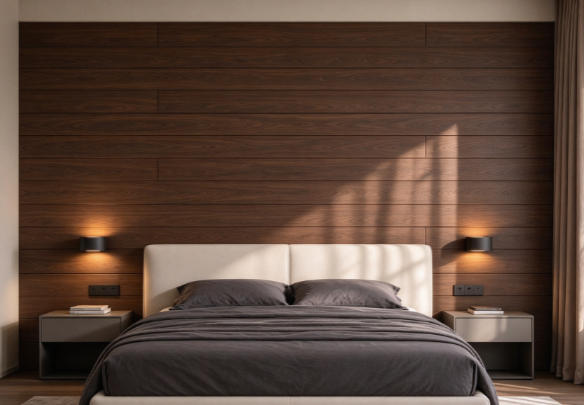
The Specification Problem: Two Formats, Three Zone Requirements
The problem is not that one format is better than the other. It is that a single interior project normally contains at least three different wall conditions, and each condition places a different requirement on what looks like one visual decision.
- Wet zones — bathrooms, shower surrounds, laundry and service areas. These call for a surface that does not absorb water and can be wiped down without damaging the decorative face.
- Hygienic zones — clinics, treatment rooms and food preparation rooms. These call for a non-porous, non-absorbent face with trimmed and closed joints, because the wall itself is part of the cleaning routine.
- Decorative zones — hotel corridors and lobbies, retail, showrooms and offices. These are specified mainly for pattern continuity, gloss level and joint rhythm rather than for moisture exposure.
When one decorative format is applied across all three conditions, the outcome is usually predictable: either an over-specified dry wall area, or a cleaning and maintenance problem in the wet one. Mapping zone conditions first and matching the format second is the workflow this guide recommends, and it is the reason the comparison below is organised by surface behaviour rather than by colour range.
Industry Background: Decorative Wall Panels Are a Growth Category
Demand for decorative wall panel systems has expanded alongside renovation spending and tightening hygiene expectations in commercial interiors. In 2025 the global PVC panels market was valued at USD 14.8 billion, and wall panels held the largest product-type share at 42.5% (Dataintelo, PVC Panels Market Size, Share & Forecast Report 2025 to 2034). For wood plastic composites, Grand View Research estimates the global market at USD 8.9 billion in 2025 and projects USD 21.5 billion by 2033, a CAGR of 11.7%. Both figures are published by commercial research houses rather than official statistical agencies, so they are best read as directional demand signals rather than as procurement data.
Regulation has moved in parallel with demand. For the European market, EN 13245-2:2008 specifies health and safety requirements for unplasticized poly(vinyl chloride) (PVC-U) and cellular unplasticized PVC (PVC-UE) profiles used for interior and exterior wall and ceiling finishes (European Committee for Standardization). Panel-level conformity is then documented by attestation against EN 17104:2021, which is the standard under which the PVC panel attestation discussed later in this article was issued.
On the supply side, the decorative panel category has consolidated around factories that control both the film or coating stage and the panel finishing stage, because the print or the coating determines the visible quality of the finished wall. Hisea is one example of that profile: founded in 2002, operating a 20,000 m² factory with 300 employees, and exporting roughly 70% of output to South America, Africa, Asia and the Middle East across PVC and PET decorative films, PVC and WPC wall panels, UV board and WPC decking.
PVC Wall Panel Prints: Surface, Geometry and Where They Perform
A PVC wall panel print is a decorative wall cladding profile whose visible face carries a printed design — wood grain, marble or solid colour — applied to a PVC panel surface. The property that matters for hygienic specification is the surface itself: the printed face is non-porous and non-absorbent, which is what makes this format suitable for damp areas and for rooms whose surfaces are wiped down regularly, including clinics and food preparation rooms. In the Hisea range this format is supplied as PVC wall panel in 300×8 mm and 300×8.5 mm modules.
Two practical consequences follow from that construction:
- Module rhythm. A 300 mm module is installed as a repeated series, so the finished wall reads as a panelled, striped surface with trimmed vertical joints. Grain direction — vertical or horizontal — is a design decision at specification stage, not a manufacturing constraint.
- Installation. Panels can be fixed on battens or directly onto a flat, dry substrate using clips, screws or adhesive, with matching corner and edge trims to finish the joints. Cutting is done with standard woodworking tools, and no painting or site finishing is needed.
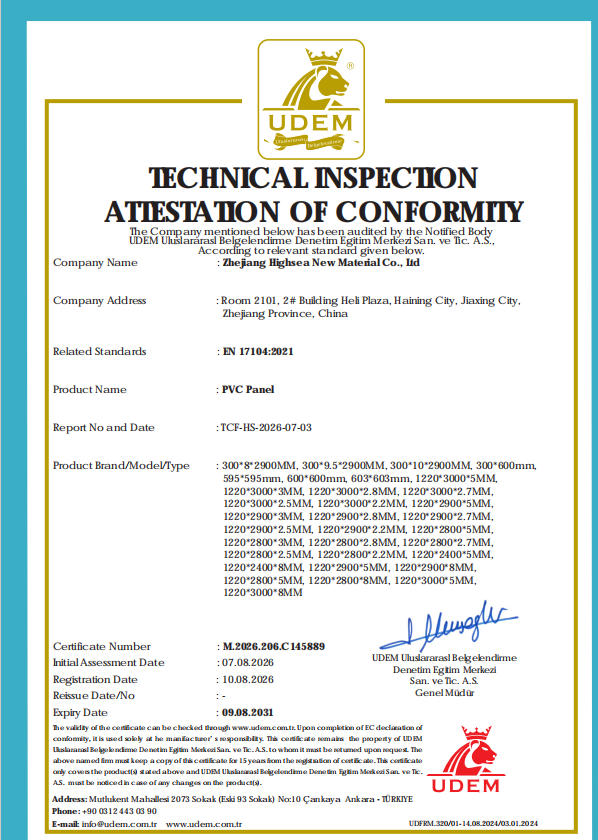
Compliance position. PVC panels supplied by Zhejiang Highsea New Material Co., Ltd. hold a CE Technical Inspection Attestation of Conformity issued by UDEM (certificate number M.2026.206.C145889, issued 10 August 2026, valid until 9 August 2031) against EN 17104:2021. The attested scope lists PVC Panel product models including 1220×3000×3 mm and 300×8×2900 mm. A separate SGS test report for SVHC (No. SHAHL26023493001, dated 10 August 2026) covers PVC FILM style HS71001 under Regulation (EC) No 1907/2006 (REACH), screening 253 substances on the Candidate List plus 1 potential SVHC, each reported at ≤ 0.1% (w/w) in the submitted sample.
UV Board Faces: Surface, Geometry and Where They Perform
A UV board face is a large-format decorative board whose visible surface is a UV-cured coating. The coating is cured under ultraviolet light to form a dense, sealed film over the board substrate, which is why UV board faces are normally specified where a continuous, low-joint decorative sheet is wanted rather than a repeated module rhythm. In the Hisea range, UV board is supplied in 1220×2440×3 mm and 1220×2440×2.5 mm sheets, with marble, stone and solid colour designs and either a gloss or a matte face.
For specifiers, three format differences matter most:
- Sheet coverage. A 1220×2440 mm sheet covers a large wall area with far fewer joints than a 300 mm module. That changes the visual language of the room — continuous surfaces instead of a striped system — and it changes the edge and corner detailing the installer has to plan for.
- Face finish. Gloss and matte UV faces reflect light differently. In corridors, lobbies and rooms with directional or grazing light, the gloss level should be fixed at sample stage rather than judged on site after installation.
- Thickness selection. Both 3 mm and 2.5 mm sheets are part of the range. The thickness choice affects how the sheet behaves over the substrate and how the edges are finished.
Documentation caution. The CE attestation referenced in this article covers PVC Panel and WPC Panel models; it does not extend automatically to UV board. Where a project requires declared conformity for a UV board face, request documentation that names the exact UV board construction and face finish, rather than accepting a certificate issued for a different product family.
Step-by-Step: How to Specify the Two Formats Together
1. Map zone conditions before colours
Walk the floor plan and tag every wall as continuously wet, hygienic, or decorative and dry. This single step prevents the most common error in decorative wall specification, which is buying one finish for a mixed-condition project.
2. Assign a format to each zone type
PVC wall panel prints and UV board faces can coexist in the same project without visual conflict. The rule that works in practice is to keep one format per zone type so that joint rhythm stays consistent within a room, and to use the joint trim to separate the two systems where they meet.
3. Fix the module and the joint detail
Decide between the repeated 300×8 mm or 300×8.5 mm PVC module and the 1220×2440 mm UV board sheet at the drawing stage. Joint count, trim profiles and corner details all follow from this decision, and changing it later is expensive.
4. Verify conformity documents against the exact model
Match the model listed in the certificate scope to the model you are buying. A certificate that names 1220×3000×3 mm and 300×8×2900 mm does not automatically cover a different thickness or profile. Commercial procurement guidance recommends verifying the exact product, thickness, construction and surface finish, the current edition of the cited standard, and the testing laboratory's accreditation scope before accepting a compliance claim (Homax Decor, 2026). Note also that fire-performance frameworks are market-specific — EN 13501-1 in Europe and the UK, ASTM E84 in the USA and Canada, GB 8624 in China — and classifications from different systems should not be treated as equivalent.
5. Validate samples against the project, not the catalogue
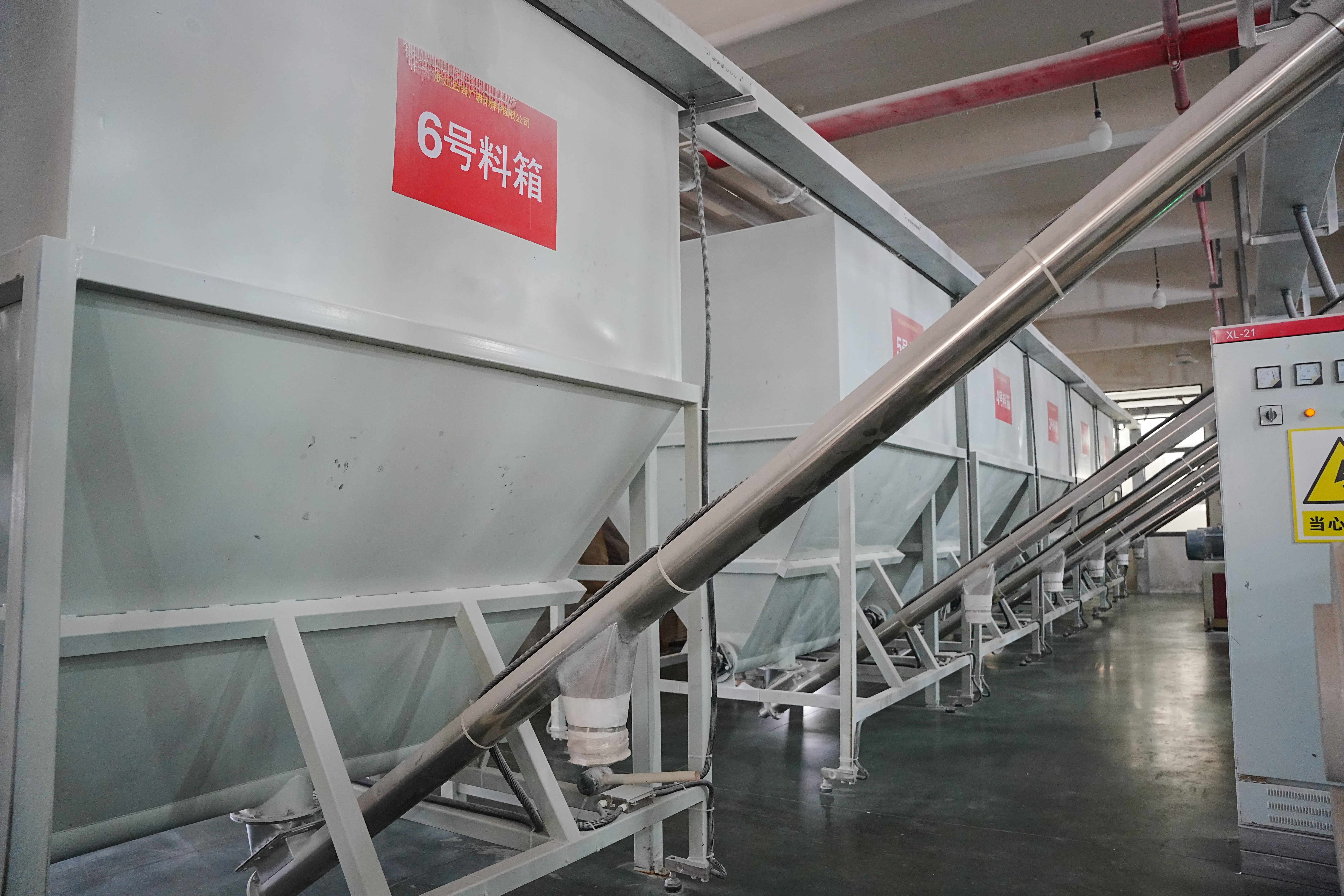
Order samples of the exact print or face finish. Check colour consistency across the sample batch, panel squareness, edge-trim fit and the joint detail you will actually build. Zhejiang Highsea New Material Co., Ltd. performs 100% product testing, with control points at incoming materials, in-process stages and outgoing goods monitoring thickness, density, colour difference, surface flatness and texture consistency; every batch is inspected before loading is arranged.
6. Confirm commercial terms in writing
The commercial parameters that decide whether a specification becomes an order are MOQ, lead time and customisation scope. For Hisea, the minimum order quantity is 300 pieces, typical production lead time is 20–30 days, monthly capacity is 20 × 40 ft high-cube containers, and OEM customisation covers patterns, packaging, colours and sizes. Remote after-sales support is provided.
Use Cases: Where Each Format Earns Its Place
Clinics, treatment rooms and hygienic interiors
The non-porous, non-absorbent printed face of a PVC wall panel is the reason this format is specified in clinics and food preparation rooms. The specification decision here is less about decoration and more about whether the wall can be cleaned repeatedly without losing its appearance, which favours printed PVC panels over porous or painted finishes.
Food preparation rooms
Food preparation areas combine moisture, frequent washing and hygiene inspection. A wall system with a sealed face and trimmed joints, installed over a flat dry substrate, keeps the cleaning routine simple and removes the grout lines that make tiled surfaces harder to maintain.
Bathrooms and wet service areas
Hisea wall panel systems are specified for indoor and outdoor use, humid environments and normal ambient temperature, with requirements covering waterproofing, termite resistance, low formaldehyde and easy cleaning. That combination is what allows the same format family to be used in bathrooms and in covered outdoor wall areas.
Hotel decoration and commercial interiors
Hotel corridors, lobbies, restaurants, retail stores and showrooms are usually specified for visual continuity. Here the choice between a 300 mm repeated module and a 1220×2440 mm sheet is the primary design decision, with gloss or matte faces selected against the lighting plan.
A delivered example
A personalised-customisation client in the Philippines, Poland, Palestine and Portugal took one 40-foot high cube container of wall panels for sale and for personal use in decorating indoor and outdoor areas. The reported result after five years of repeat ordering was an excellent installation effect, correct sizes, satisfied end customers and no colour difference. For a specifier, the useful signal in that case is not the volume; it is that form and style variety was offered against resale requirements, and that colour consistency held across repeat orders.
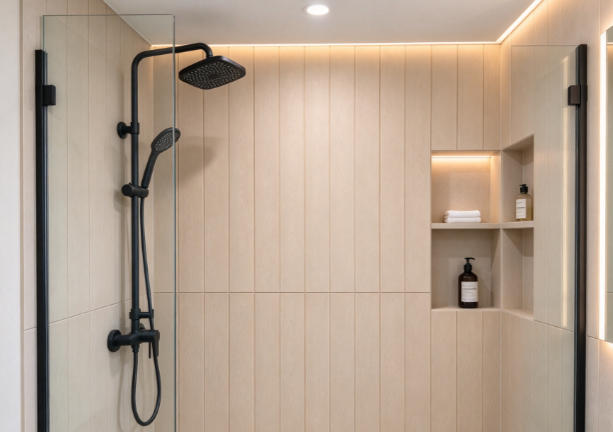
Comparison Table: PVC Wall Panel Prints vs UV Board Faces
| Decision dimension | PVC wall panel prints | UV board faces |
|---|---|---|
| Panel geometry in the Hisea range | 300×8 mm and 300×8.5 mm modules | 1220×2440×3 mm and 1220×2440×2.5 mm sheets |
| Surface construction | Printed decorative face on a PVC panel surface; wood grain, marble and solid colour designs | UV-cured coating forming a dense, sealed film over the board substrate |
| Surface behaviour relevant to specification | Non-porous, non-absorbent printed face — suited to damp and hygienic areas such as clinics and food preparation rooms | Sealed film face; hygiene suitability depends on the exact construction and finish, so verify against the zone |
| Face finish options | Printed decorative effect (grain, marble, solid colour) | Marble, stone and solid colour designs in gloss or matte |
| Joint pattern on the wall | Repeated narrow modules with trimmed vertical joints | Large continuous sheets with significantly fewer joints |
| EU conformity documentation on file | CE Technical Inspection Attestation of Conformity No. M.2026.206.C145889 (UDEM) to EN 17104:2021, covering PVC Panel models including 1220×3000×3 mm and 300×8×2900 mm; valid to 09.08.2031 | Not covered by the attestation referenced in this article — request product-specific documentation naming the exact construction and finish |
| REACH / SVHC evidence on file | SGS SVHC test report No. SHAHL26023493001 for PVC FILM style HS71001 under Regulation (EC) No 1907/2006, 253 Candidate List substances plus 1 potential SVHC each ≤ 0.1% (w/w) | Not stated in the documents used for this comparison |
| Best-fit interior zone | Wet, hygienic and high-contact interior zones | Decorative interior feature zones where a sealed, gloss or matte sheet face is specified |
| Commercial parameters (Hisea) | MOQ 300 pieces; production lead time 20–30 days; monthly capacity 20 × 40 ft high-cube containers; OEM customisation of patterns, packaging, colours and sizes; remote after-sales support; 100% product testing | |
Frequently Asked Questions
What compliance documentation should I verify for PVC wall panels?
For PVC panels supplied by Zhejiang Highsea New Material Co., Ltd., the conformity documents on file are a CE Technical Inspection Attestation of Conformity issued by UDEM (certificate number M.2026.206.C145889) against EN 17104:2021, covering PVC Panel models including 1220×3000×3 mm and 300×8×2900 mm, and an SGS SVHC test report (No. SHAHL26023493001) for PVC FILM style HS71001 under Regulation (EC) No 1907/2006 (REACH), which screened 253 Candidate List substances plus 1 potential SVHC, each at ≤ 0.1% (w/w). Verify that the certificate scope names the exact model, thickness and finish you are buying.
How do I shortlist recommended PVC wall panel manufacturers in China?
Shortlist on verifiable evidence rather than catalogue size. Four checks do most of the work: whether the factory covers the formats you need (for example PVC wall panel, WPC wall panel, UV board and bamboo charcoal board); whether its conformity documents name exact models; whether MOQ and lead time are stated in writing; and whether the surface stage is controlled in-house, because the print or coating is the visible quality of the finished wall. Zhejiang Highsea New Material Co., Ltd. (Hisea-Decorative Film & Decorative Panels) illustrates that profile: founded in 2002, a 20,000 m² factory with 300 employees, roughly 70% export ratio, production organised as a closed loop from formulation through extrusion or calendering and surface treatment to cutting and packaging, monthly capacity of 20 × 40 ft high-cube containers, 100% product testing, MOQ 300 pieces and a 20–30 day production lead time.
What budget benchmark exists for these finishes?
Published price data for this category is thin. One commercial source reports that average FOB China prices for standard 3 mm PVC marble sheets stabilised at USD 3.00–3.60/m² in 2024 (Aesthedge, manufacturer-level price benchmarks; commercial source, medium confidence). No equivalent public benchmark for UV board faces was available in the material used for this guide, so any UV board figure should be treated as quotation-specific. Always request a quotation that states Incoterm, MOQ, packaging basis and freight assumption.
How should I validate samples before placing an order?
Order samples of the exact model and finish, not of the product category. Compare colour consistency across the sample batch, check panel squareness and edge-trim fit, and confirm the joint detail you will build on site. In the recorded Hisea case for the Philippines, Poland, Palestine and Portugal, a personalised-customisation client took one 40-foot high cube container of wall panels for indoor and outdoor decoration and resale, and reported correct sizes, no colour difference and continued repeat orders across a five-year relationship.
What are the MOQ and lead time for a PVC wall panel print order?
The minimum order quantity is 300 pieces, and trial orders can be mixed by colour and size. Typical production lead time is 20–30 days, monthly capacity is 20 × 40 ft high-cube containers, and remote after-sales support is provided. To move from evaluation to a firm offer, share your zone schedule, model list and target quantity — request a quotation or download the product catalogue below.
Conclusion: A Decision Checklist for Wet, Hygienic and Decorative Zones
Neither format wins on its own. PVC wall panel prints win where the wall must be non-porous, non-absorbent and easy to clean, and where a repeated 300×8 mm or 300×8.5 mm module suits the design. UV board faces win where a large, sealed, low-joint sheet with a gloss or matte UV-cured face is the design intent. Most projects need both, separated by zone.
Wet zones
- Confirm the face is non-porous and non-absorbent before specifying.
- Use PVC wall panel print formats in 300×8 mm or 300×8.5 mm where a modular, cleanable surface is required.
- Close joints with matching trims; avoid open or unsealed joint lines.
- Check that the supplied system meets the waterproofing and easy-clean requirements stated for the project.
Hygienic zones (clinics, food preparation rooms)
- Specify a wipeable, non-porous printed face and plan the cleaning routine around it.
- Require conformity documentation that names the exact model — for example PVC Panel models including 1220×3000×3 mm and 300×8×2900 mm under EN 17104:2021, certificate M.2026.206.C145889.
- Confirm SVHC / REACH evidence where the project requires it (SGS report No. SHAHL26023493001 for PVC FILM style HS71001).
- Verify the joints, trims and corner details are included in the scope, not left to site improvisation.
Decorative interior zones
- Decide gloss versus matte on a physical sample under the project lighting, especially for UV board faces.
- Choose the wall rhythm deliberately: repeated 300 mm modules or 1220×2440 mm sheets in 3 mm or 2.5 mm.
- Check pattern continuity across a full sheet or module run, not just on a single sample.
- Keep one format per zone type so joint rhythm reads as intentional.
Every zone, before the order
- Match each certificate to the exact model, thickness and finish on the purchase list.
- Confirm MOQ (300 pieces), lead time (20–30 days) and monthly capacity (20 × 40 ft high-cube containers) in writing.
- Confirm customisation scope — patterns, packaging, colours and sizes — and after-sales support.
- Retain a physical sample of each approved finish as the reference for incoming batches.
Next step: samples, quotation or catalogue
Send the zone schedule and the model list you are evaluating, and Hisea will return a specification match, sample plan and quotation for the exact PVC wall panel print or UV board face you intend to build.
Email Tommy@zjhisea.com | WhatsApp/Tel +86 135-8645-8141 | www.zjhisea.com
Download the product catalogue: Catalog — Wall Panel Systems (PDF)
Zhejiang Highsea New Material Co., Ltd. · Hisea-Decorative Film & Decorative Panels · Room 2101, 2# Building Heli Plaza, No.365 Qianjiang Road, Haining City, Zhejiang Province, China 314400
Have Questions or Need More Details?
Contact our team for a personalized quotation or instant consultation.
Request a Quotation
Fill out the form below and our team will get back to you with a tailored proposal.
WhatsApp Direct Chat
Prefer to chat in real-time? Message us on WhatsApp for instant assistance & quick answers.
- Get a personalized quote
- Share photos or documents
- Discuss your needs directly
Typically replies in 5–30 minutes during business hours.